Categories
reviews

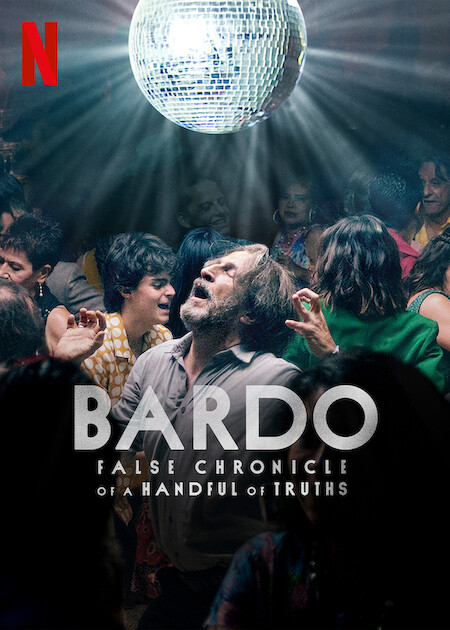
Bardo: A False Chronicle of a Handful of Truths – Film Review (Spoilers)

by Ron Anahaw

Jfc, what a wild movie to casually watch on a Wednesday evening.

The movie opens with an amazing visual sequence: we see only a man’s shadow as he continuously leaps in the middle of the desert, reaching higher and going farther each time. We don’t know who the man is, where he is, or why he’s doing this. We can only see how high his view goes.

Bardo: A False Chronicle of a Handful of Truths is Alejandro González Iñárritu’s latest film, marking seven years since his 2015 film The Revenant. You may also know him for his 2014 film The Birdman (one of my favorite movies).

Bardo could be described as a meta, poetic, philosophical portrait of a man whose career is pursuing truth while his life is destabilized by his own mythology. Or it could be described as a collection of vignettes bound together by magical realism and imposter syndrome. There are lots of fancy ways to describe what Iñárritu’s done here, for better or worse.

We follow Silverio Gama, a recently acclaimed journalist whose career is finally on the rise. He’s set to be the first Mexican to be awarded a prestigious journalist prize by the Academy of American Journalists. People have drawn the parallels between Silverio and Iñárritu, but I don’t recall if Iñárritu ever directly stated the connection. Either way, the parallels are there. Silverio’s acclaimed work is also titled Bardo: A False Chronicle of a Handful of Truths and its critics decry it for bending the truth, while Silverio defensively states that it’s “docufiction.”

There’s a lot to unpack. Let’s start with the magical realism. Whenever reality is disrupted in the movie, it’s breathtaking. Lucía, Silverio’s partner, gives birth to a newborn who promptly requests to stay inside his mother because “the world’s too fucked up.” So the doctors put the baby back inside. If you’re as clueless as I am, the movie clearly later spells out how this represents how Silverio and Lucia’s child died shortly after its birth.

Hernan Cortes awaits Silverio atop a pile of indigenous corpses. Three axolotls wade around in ankle-high water inside a bus, which leaks out into Silverio’s apartment in the desert. Silverio speaks entire monologues without moving his mouth. He reconciles with his dead mother and father. For some reason, through all of it, it felt like Silverio had some degree of…control? Like he was willing reality to disrupt in these ways. Perhaps because the movie primes us to perceive Silverio as Iñárritu, so he is simultaneously protagonist and director.

The truth is, there is no such control to it. But more on that later.

Daniel Giménez Cacho gives an astoundingly impressive performance as Silverio. He lives and breathes Silverio in all his holier-than-thou, pro-and-anti-Mexico, imposter syndrome-d, romantic, family man-ness. Similarly, all the members of Silverio’s family are gifted with intimately convincing performances: Griselda Siciliani as Lucía, Ximena Lamadrid as their daughter Camila, and Iker Sanchez Solano as Lorenzo. Theirs is a family whose love, though far from perfect, feels real and tangible. There’s mess, but there’s warmth.

In its simplest, you can divide the film into two aspects: Silverio’s personal and professional lives. His personal life of wrestling with his insecurity, bridging the gaps in his family, and repairing broken friendships in Mexico. And his professional life of feeling like an imposter despite winning an incredible accolade.

But the film’s execution prolongs this across a wieldy 2 hours and 40 minutes. It had me in the beginning, lost me in the middle, and impressively got me–like, really got me–in the last thirty minutes.

Biggest spoiler alert in the review: all of Silverio’s fantastical experiences so far are representing his brain activity after he has a stroke and falls into a coma. The wildest part is you get these hints very strongly in the first twenty minutes of the movie, you just don’t put it together (or at least, I didn’t) until the end.

There is a beautiful sequence where Silverio wanders the desert and sees so many of his loved ones, friends, and peers beckoning to him as he navigates the sandy terrain. Before the end, he hears his wife and two children beg for them to join him. He insists that they can’t come with him, there’s nothing for them where he’s going.

Then we return to the shot at the beginning, and wonder to ourselves if Silverio flies off to some afterlife, or awakens back to his family. Either way, the film did a beautiful job of piecing together the imperfect parts of an imperfect man’s life.

SCORE: 95/120

EnjoymentEmotionAestheticNarrative
79107
CohesionOriginalityExecutionImpact
7977
EndingRewatchabilityRecommendabilityStaying Power
9779
Categories
reviews

The Banshees of Inisherin: Film Review (Spoilers)

by Ron Anahaw

No one writes about dreary European violence better than Martin McDonagh. That’s a sincere compliment. I’m a big fan of his work, from his films (In Bruges, Seven Psychopaths) to his stageplays (The Pillowman, The Beauty Queen of Leenane). In his work, violence spills out from complicated characters struggling to make sense of a complicated world. It’s never so simple as “good guy shoot bad guy” and “bad guy shoot good guy.”

In the case of The Banshees of Inisherin, it’s “man cuts off own fingers to convince his former best friend to stop talking to him.” Yeah. Wild, right? Colin Farrell as Padraic and Brendan Gleeson as Colm play two former best friends in 1920s Ireland. Padraic is displeased to one day discover that Colm has decided that he just doesn’t like him anymore. Padraic just doesn’t get it. Colm’s feelings are much deeper than a decision made on a whim, but it’s puzzling all the same to Padraic. Colm is so done with Padraic’s “dullness” that after Padraic’s repeated attempts to reconcile with Colm, he threatens to cut off his own fingers and give them to Padraic if he’s not left alone. Absolutely. Nuts.

Meanwhile, Kerry Condon plays Siobhan, an intellectual stuck on an island of “boring men,” and sister to Padraic, and Barry Keoghan plays the Inisherin “gom” (slang for idiot? I’m not sure) who is abused by his policeman father.

There’s a pervading sense that not a single one of these characters is able to get what they really want on Inisherin, which makes it feel less like an island and more like purgatory. The thrust of the film is Padraic’s unrelenting desire to patch things up with Colm, who in turn, will stop at nothing to stop Padraic from bothering him with his dullness. This is all against a backdrop of the Irish Civil War, so one can surmise that Padraic and Colm’s dynamic is a metaphor for the conflict. As someone who’s woefully uninformed to that history, the film was…fine. The performances are well done, especially by Condon and Farrell, and the shots are simply gorgeous. But for me, Banshees doesn’t approach that same dread, that same tension, that same satisfaction, as something like McDonagh’s Pillowman or In Bruges. It feels like an allegory dressed up as a dark comedy instead of an allegorical dark comedy.

The film balances long, lonely shots of Inisherin with the gruesome: Colm hurling his severed fingers at Padraic’s door, or Dominic being beaten black and blue by his father. Padraic’s earnest “dullness” eventually gives way to vengeance after his precious pet miniature donkey dies from attempting to eat one of Colm’s fingers.

As I told a friend, the movie is memorable. And by no means is it bad. I just think I wasn’t the audience for it. Siobhan’s arc spoke to me the most in the film. Though she yearns for more from life, she feels somewhat tethered to Inisherin, mostly in part to her brother. But through a combination of being offered a job on the mainland, and the ever-increasing absurdity of the conflict between Padraic and Colm, she musters the courage to leave. As a viewer, I breathed a sigh of relief and thought, “Good for you, Siobhan. I don’t much want to be on Inisherin anymore either.”

SCORE: 66/120

EnjoymentEmotionAestheticNarrative
6686
CohesionOriginalityExecutionImpact
6873
EndingRewatchabilityRecommendabilityStaying Power
4444
Categories
reviews

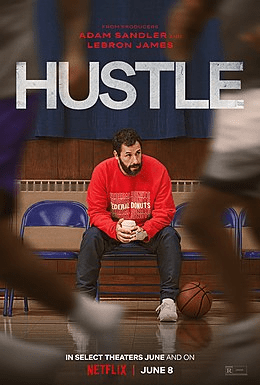
Hustle: Film Review (Spoilers)

by Ron Anahaw

I played basketball a couple times as a kid before someone passed me the ball and it hit me in the face. I was so embarrassed that I didn’t play basketball again. Watching Hustle made me wish I didn’t stop playing.

There’s a lot of star power in the movie: Adam Sandler and Queen Latifah both obviously come to mind, as well as the scores of professional basketball figures playing themselves. But the heart of the movie is between Adam Sandler, playing a 76ers basketball scout named Stanley, and Juancho Hernangomez (a player for the Toronto Raptors in real life) as Bo Cruz, an unknown basketball phenom playing on streetside courts in Spain. There is magic to watching Bo play. He’s got length, he’s got presence, and he’s got an athletic dexterity that allows him to move through the court with the grace of a dancer and the power of a bear. When you watch Bo deny someone a point, you can’t help but shake your head and laugh.

Things get rocky because Stanley brings Bo to the States despite his new boss refusing to take on Bo. Bo’s got a lot on the line here: he’s the breadwinner for his mother and his daughter, and he quit his job under Stanley’s claims that he could get him a sure spot in the NBA. Not only that, but Bo’s past assault charge complicates his presence in the States.

This is your basic underdog story. Bo’s got raw, natural talent, but can Stanley help refine that talent into something that can withstand the scrutiny of the public, the mental stress of professional games, and catapult him into success despite not having the 76ers in his corner anymore? Adam Sandler plays Stanley really well: a man who loves the sport (much like Sandler himself) and wants nothing more than to be on the court again, even if it’s as an assistant coach rather than as a player.

Scratch that–something he does want more is to do right by Bo. And as a viewer, you want that too. Bo is written with a sweetness to him, an earnestness. But Hernangomez plays that sweetness hand-in-hand with a drive, a ferocity: to win, to succeed, to provide for his family. Stanley’s old friend and mentor says something to Stanley that becomes his mantra throughout the film: “Never back down.” Straightforward, but inspiring and effective–just like this movie.

SCORE: 95/120

EnjoymentEmotionAestheticNarrative
10867
CohesionOriginalityExecutionImpact
9786
EndingRewatchabilityRecommendabilityStaying Power
71098
Categories
Uncategorized

Protected:

This content is password-protected. To view it, please enter the password below.

Categories
Uncategorized

Writing Prompts

This will be a living page of writing prompts, where I add a new one each month! Feel free to message me one to add here. And if you end up making something using one of the prompts, send it to me and I would love to read it.

  • September 2021: Find the last thing you wrote. Take the very last sentence, and start something completely new with it!
  • October 2021: Explain the story of someone’s name.
  • November 2021: Write about three cherished memories of yours.
  • December 2021: Jump between at least three different perspectives. Freestyle it otherwise.
  • January 2022: What would be the first line in the book of your life?
  • February 2022: Find the magic in something “ordinary.”
  • March 2022: Write out the burning questions on your mind at this point in your life. Answer them from the POV of someone completely different than you.
  • April 2022: Explain a character’s whole life in just one sentence.
  • May 2022: The water cycle.
  • June 2022: What does a receipt for a relationship look like?
  • July 2022: Take something you’ve written before and add a new genre in it.

Categories
Uncategorized

Recommendations

I could never understand how people could remember offhand the running list of movies, books, shows, or music that left an impact on them. So over the years I’ve been keeping track of the media that’s left a mark on me, and put them together in a ranked/categorized list!

Take a look here! This is by no means meant as my take on a “Best Of,” list. It’s just the works that mattered enough to me to want to remember them.*

Maybe you can find something there that will end up mattering to you too. If you do, feel free to message me and I would love to talk to you about it.

*I used my own invented metrics: 12 metrics ranked on a scale of 10, for a maximum total score of 120.

Categories
Uncategorized

Mahal Kita – May 2019

a 17 min solo performance written and performed by Ron Anahaw at Bennington College for Kirk Jackson’s “Solo Performance” class

Categories
Uncategorized

String Rings – May 2019

a community-oriented currency centered on commitments and accountability

CONCEPT

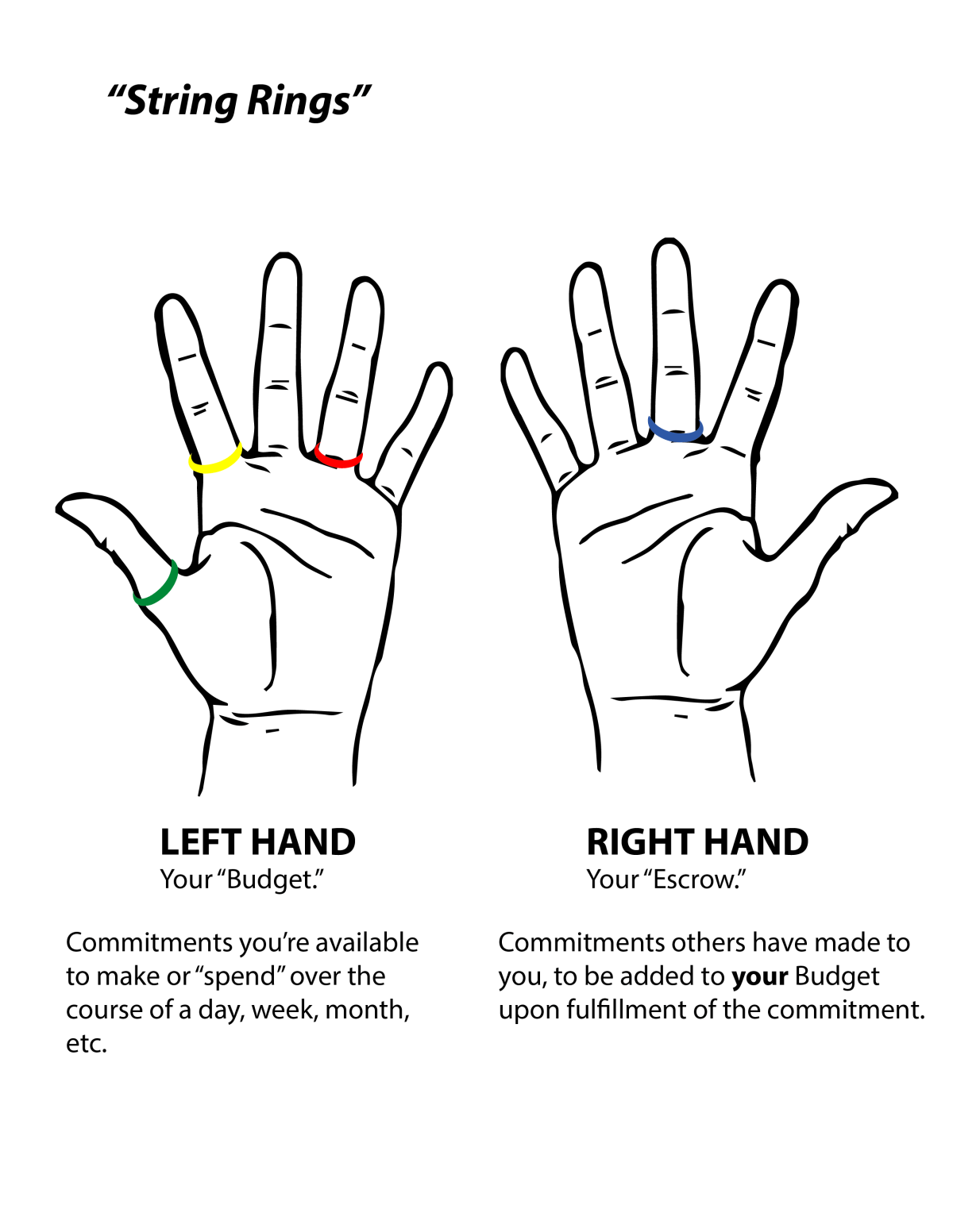
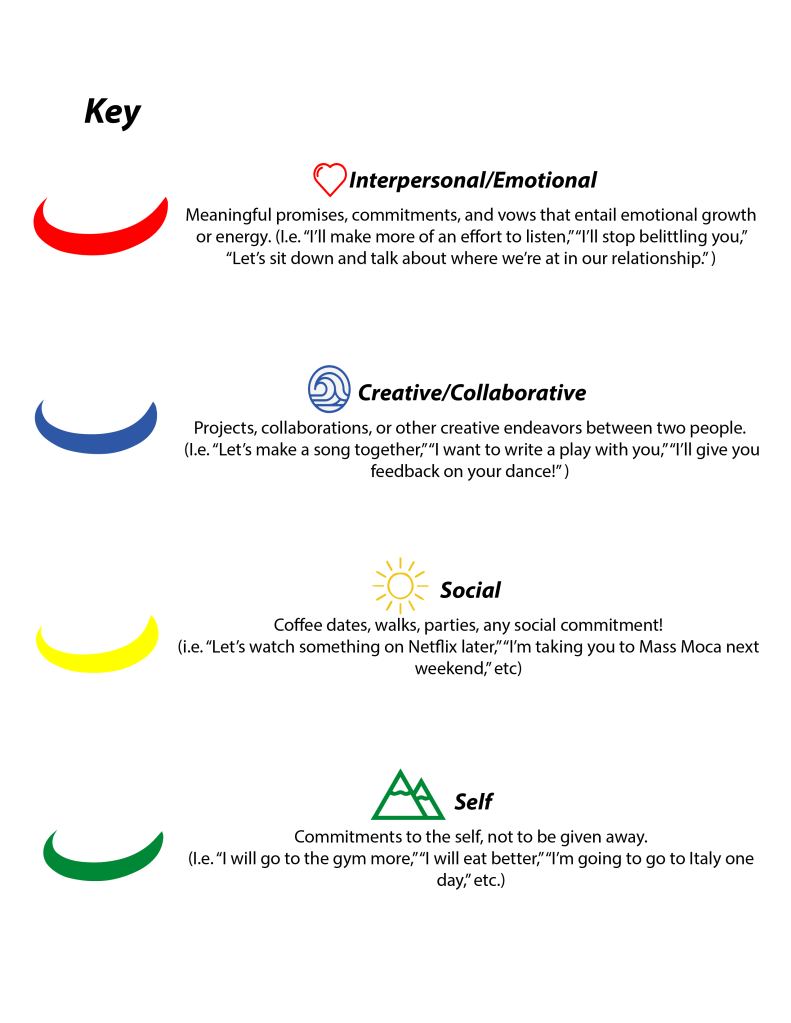
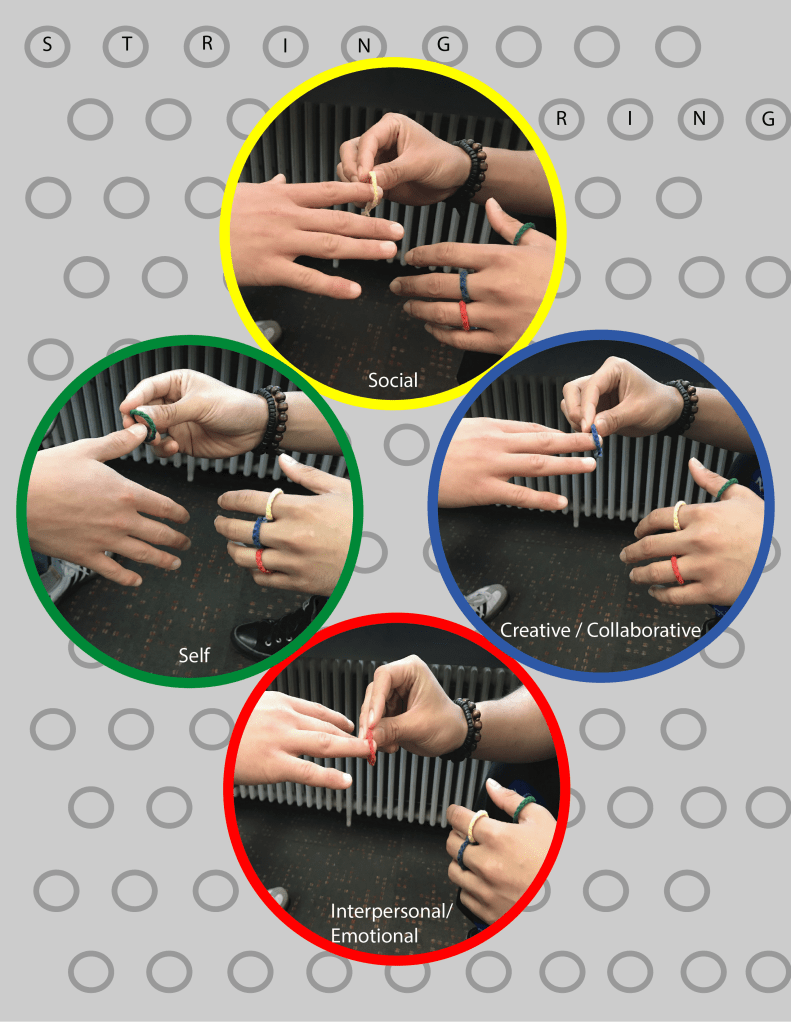
A physical, visual, and gestural system of tracking one’s different commitments. String rings are categorized into Interpersonal/Emotional, Creative/Collaborative, Social, and Self commitments (detailed in the “Ring Key.”)

APPLICATION

Individuals wear string rings on their Left Hand to represent their “Budget,” or rings they have available to “spend.” Individuals wear string rings on their Right Hand to represent their “Escrow,” or commitments made to them.

Individuals are free to give their rings for anything from small to large commitments, for any time span.

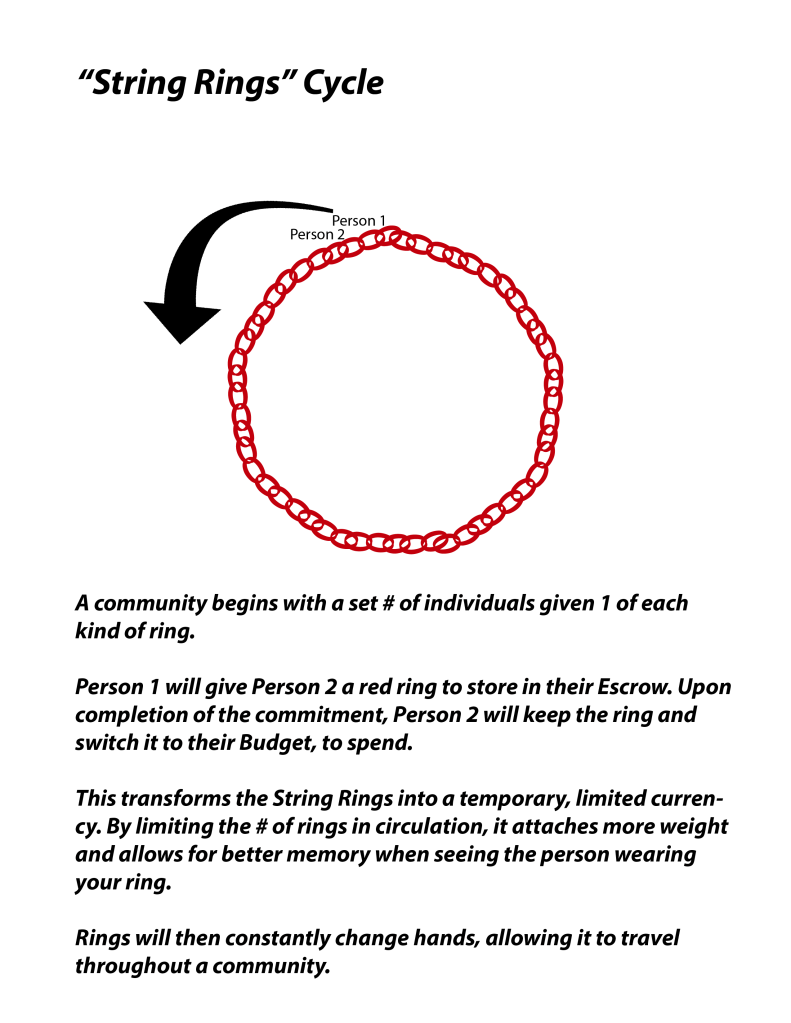
  1. INTENTION: Rather than wanting to complete a task for the sake of a good reputation or to get your ring back, the completion of the commitment becomes the reward itself. It also allows you to pay it forward and frees up the ring for Person 2 to use.

  1. METAPHOR: . With the system having the rings constantly change hands, it strongly weaves in the idea of the strings that tether us together. The power of the promise is moved from person to person and constantly builds on itself as commitments are fulfilled again and again. Suddenly, a single ring tells the story of dozens of people.

  1. COLLECTIVE MINDSET: The life cycle of a single ring will tell the story of how one person’s commitment allowed another one to come to fruition. Rather than an individual-focused system that rewards someone by rewarding the individual, it would promote a collective mindset by framing “allowing someone else to make a commitment” as the reward.